Work record
Long Walk to Freedom
1994 · Postwar Contemporary · Memoir · English
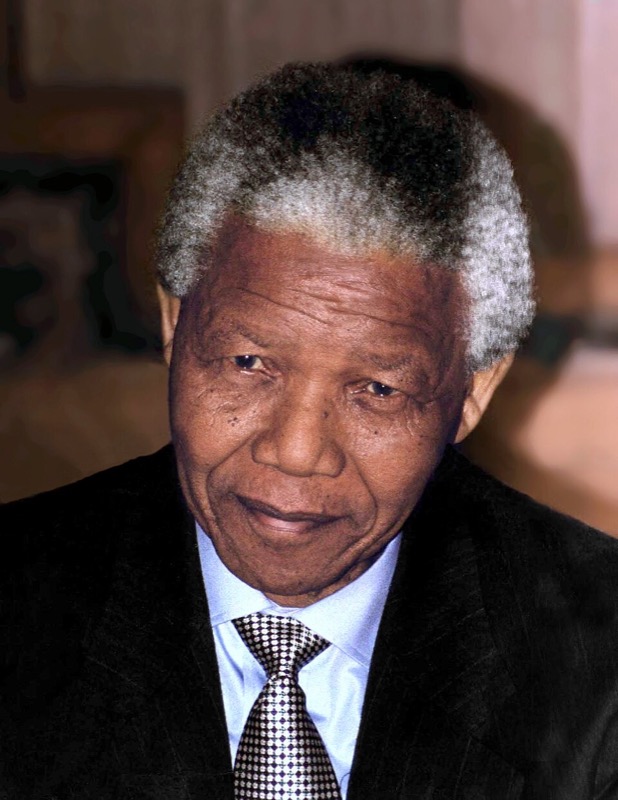

Summary
Long Walk to Freedom is Mandela's memoir of childhood, political awakening, resistance, imprisonment, negotiation, and democratic transition. It begins in rural Transkei, with family, Thembu traditions, mission schooling, and the gradual widening of Mandela's world through education and urban life. The memoir then follows his legal training, life in Johannesburg, joining the African National Congress, the Defiance Campaign, family strain, underground organizing, the turn toward armed sabotage, arrest, trial, and imprisonment. The prison sections are the book's moral center. Robben Island becomes a school of endurance, where labor, discipline, study, argument, solidarity, illness, and small negotiations preserve political identity under deliberate humiliation. Mandela presents himself with dignity but not as a saint untouched by ambition, anger, or cost. The later chapters trace shifting government strategy, secret talks, release, negotiations, violence, and the election of 1994. The medical lens is high because the memoir records prison health, hard labor, aging, tuberculosis risk and later illness, emotional deprivation, family separation, and the psychology of long confinement. It also shows how collective routines, education, exercise, humor, and political purpose helped prisoners endure. Historically, the memoir is both personal narrative and national founding story, written as apartheid ended and Mandela became president. Because it is copyrighted, no full text or extended quotation belongs here. Its religious context includes mission education and the broader role of churches in anti-apartheid life, though Mandela's politics remain primarily nationalist, democratic, and humanist. Read beside King, Bonhoeffer, Douglass, and Gandhi, the memoir belongs to the literature of conscience under imprisonment. Its greatness lies in making endurance neither passive nor merely heroic: freedom is shown as a long discipline of memory, organization, restraint, and negotiation under conditions designed to break the self. It is also a study of leadership aging under pressure and emerging into responsibility after captivity and struggle.
Plot or Argument
- Childhood opens into political education
Mandela traces rural origins, mission schooling, law, Johannesburg, and entry into ANC politics.
- Resistance reshapes private life
Campaigns, bans, underground work, family strain, sabotage, and trial show politics consuming ordinary ambitions.
- Prison becomes a discipline of freedom
Robben Island and later prisons test health, identity, solidarity, and leadership over decades.
- Negotiation turns captivity toward nationhood
The final movement follows talks, release, violence, compromise, and democratic election.
Characters
- Nelson Mandela, memoirist and protagonist
Lawyer, ANC leader, prisoner, negotiator, and future president whose life structures the memoir.
- Walter Sisulu, mentor and comrade
ANC leader and close Mandela ally throughout political work and imprisonment.
- Oliver Tambo, colleague and ANC leader
Mandela's law partner and later leader of the ANC in exile.
- Winnie Madikizela-Mandela, wife and activist
Anti-apartheid activist whose marriage to Mandela was strained by persecution, separation, and politics.
Lessons
Endurance is organized, not merely felt
Mandela shows prison survival as routine, study, solidarity, and purpose. The memoir rejects the idea that courage is only spontaneous emotion.
- What practices sustain Mandela and his comrades?
- How does prison attempt to break time?
Freedom can require restraint
The memoir repeatedly values discipline over immediate expression. Mandela's restraint is strategic, moral, and sometimes personally costly.
- When does restraint strengthen resistance?
- What does restraint cost Mandela's family life?
A life can become national memory
Long Walk to Freedom makes one biography carry a collective struggle. Its narrative power also invites readers to ask what gets simplified when a nation tells itself through one life.
- How does Mandela balance personal and collective story?
- What histories remain at the edge of the memoir?
Context
The memoir spans apartheid South Africa, ANC resistance, Rivonia, Robben Island, negotiations, political violence, and the first democratic election.
Composition
Published in 1994, it drew on Mandela's prison manuscripts, later recollection, and editorial collaboration during the transition to democracy.
Reception
The memoir became a global account of anti-apartheid struggle and Mandela's public self-presentation as leader, prisoner, negotiator, and reconciler.
Comparisons
- i-am-prepared-to-die
The Rivonia speech presents Mandela at the threshold of imprisonment; the memoir narrates the decades that followed.
- sermons-and-letter-from-birmingham-jail
King and Mandela both make confinement central to political witness, but Mandela's memoir emphasizes endurance across decades.
- narrative-and-fourth-of-july
Douglass and Mandela use autobiography to expose racial domination and claim political personhood.
Quotes
For Students
A reading companion for classical Christian high school students. See the student guide.
Reading Guide
Watch for
- Mandela's childhood in the Transkei: his Thembu upbringing, the regent's court where he watched elders debate until consensus emerged, and mission schooling. Notice which lessons of leadership he traces back to these years.
- His move to Johannesburg, his legal training, and his friendship with Walter Sisulu and Oliver Tambo, which draw him into the African National Congress and the Defiance Campaign.
- The turn from nonviolent campaigning to armed sabotage after years of bans, and the arguments Mandela offers for it. Pay attention to how he frames the decision and what limits he says were set on it.
- The Robben Island chapters, where hard labour in the lime quarry, study, argument, and small negotiations with warders become, in Mandela's telling, a discipline that preserved the prisoners' identity.
- The secret talks with the government in his later imprisonment, his release, and the negotiations and violence before the 1994 election. Watch how the prisoner becomes a negotiator.
Key terms and names
- Transkei and the Thembu
- The rural region of the Eastern Cape where Mandela was born and the Xhosa-speaking people whose royal house his father served. The regent's court where Mandela grew up gave him his first model of leadership by listening.
- African National Congress (ANC)
- The political organization Mandela joined in Johannesburg in the 1940s, helping to found its Youth League. The memoir follows the ANC from protest campaigns to underground resistance, exile, and finally negotiation.
- Apartheid
- The system of legally enforced racial separation and white minority rule introduced by the National Party after 1948. Its pass laws, bans, and restrictions shape every stage of Mandela's adult life in the memoir.
- Defiance Campaign
- The ANC's 1952 campaign of deliberately breaking unjust laws and accepting arrest. Mandela served as its volunteer-in-chief, and it made him a national figure.
- Rivonia Trial
- The 1963-1964 trial of Mandela and other leaders for sabotage, named for the farm where many were arrested. Mandela's statement from the dock and the sentence of life imprisonment mark the end of his public life for nearly three decades.
- Robben Island
- The island prison off Cape Town where Mandela spent eighteen of his twenty-seven years in prison. The memoir presents it as a place of hard labour and humiliation that the prisoners turned into a school of endurance and study.
- Walter Sisulu
- Mandela's mentor in Johannesburg and comrade through the ANC, the Rivonia Trial, and Robben Island. He appears throughout the memoir as a steady counsellor and friend.
Seminar Questions
- Comprehension What did Mandela learn as a boy from watching the regent's court in the Transkei, and how does he later connect it to his own way of leading?
- Comprehension What was the Defiance Campaign, and what role did Mandela play in it?
- Comprehension Describe daily life on Robben Island as Mandela presents it: the work, the rules, and the ways prisoners organized themselves.
- Interpretation Mandela explains why the ANC turned from nonviolent campaigns to sabotage. What reasons does he give, and how does he distinguish the methods he chose from other forms of violence?
- Interpretation The memoir presents Robben Island not only as suffering but as a school. What did the prisoners learn there, and how did study, argument, and small acts of discipline preserve their sense of self?
- Interpretation Mandela writes candidly about the cost of political life to his marriages and children. Why might he include these painful admissions in a book that is also a national founding story?
- Interpretation Mandela began secret talks with the government while still in prison, without first consulting all his comrades. How does he justify this, and what does it show about his view of leadership?
- Big Question Mandela came out of twenty-seven years of imprisonment seeking negotiation rather than revenge. What makes forgiveness of an enemy possible, and is it ever a political as well as a personal act?
Faith Connections
- Romans 12:17-21 (Scripture)
Paul tells believers not to repay evil for evil, to leave vengeance to God, and to overcome evil with good. Mandela's choice after release to negotiate with the men who had imprisoned him, and his courtesy toward his former warders, gives this passage a concrete political form even though Mandela presents his reasons chiefly in moral and practical terms.
- Genesis 50:15-21 (Scripture)
Joseph, raised from prison to power, reassures the brothers who sold him that he will not take revenge. Mandela's passage from Robben Island to the presidency invites comparison with Joseph's story of long confinement ending in reconciliation.
- Martin Luther King Jr., Letter from Birmingham Jail (Great Conversation)
King, writing from a cell in 1963, defends breaking unjust laws openly and accepting the penalty, drawing on Augustine and Aquinas on unjust law. Mandela's Defiance Campaign rested on the same principle, though Mandela later concluded that nonviolence alone could not succeed in South Africa.
- Dietrich Bonhoeffer, Letters and Papers from Prison (Great Conversation)
Bonhoeffer, imprisoned by the Nazi regime, reflected on discipline, hope, and responsible action from his cell. Read beside Mandela's Robben Island chapters, his letters show another political prisoner shaping a daily discipline to keep his inner freedom.
Logic and Rhetoric
Central argument: A system that denies a people political rights and closes every lawful channel of protest leaves them two choices, submission or resistance. Mandela argues that the ANC tried protest and nonviolent defiance for decades, and only when these were met with bans and force did it turn to carefully limited sabotage. Imprisonment could confine the body, but discipline, study, solidarity, and purpose kept the prisoners free in mind. Freedom for one group cannot be secured by denying it to another, so the struggle had to end not in revenge but in negotiation and a democracy for all South Africans.
Rhetorical device: extended metaphor. The title's image of a long walk recurs at the close of the memoir, where Mandela describes reaching the top of one hill only to see many more ahead. The metaphor turns a life of campaigns, prison, and negotiation into a single journey whose end is never fully reached.
Debate: Resolved: Mandela was justified in turning from nonviolent defiance to sabotage after all lawful channels of protest were closed.
Writing Prompts
Essay: Mandela presents Robben Island both as a place designed to break prisoners and as a school that strengthened them. Using his account of labour in the quarry, study, and dealings with warders, argue how, in Mandela's telling, the prisoners turned confinement into a kind of freedom.
Comparison with Sermons and Letter from Birmingham Jail: Both King and Mandela wrote about resisting unjust laws, and both spent time in prison for it. Compare their reasoning about civil disobedience and the use of force, and argue which account of resistance is more persuasive given the circumstances each man faced.
Medical Lens
The memoir is important for prison health, long confinement, aging, separation, political trauma, and Mandela's tuberculosis history. It shows endurance as collective practice rather than individual toughness alone.
- Robben Island chapters
Hard labor, surveillance, diet, study, discipline, and solidarity shape the health and identity of prisoners.
- Later imprisonment and illness passages
Mandela's aging and health problems, including tuberculosis history, become part of the political story of captivity.
Creative Prompts
- Essay
Read Robben Island as a political institution designed to injure time, body, and identity.
- Dialogue
Let Mandela and a prison physician discuss health, dignity, and resistance under confinement.
Further Reading
Verification notes
The memoir's arc, publication date, prison emphasis, and health themes are secure. Copyrighted text is summarized without quotation.
- Verify any future short quotations against the authorized text and copyright limits.