Work record
Natural History: A Selection
c. 77 CE · Ancient · History · Latin
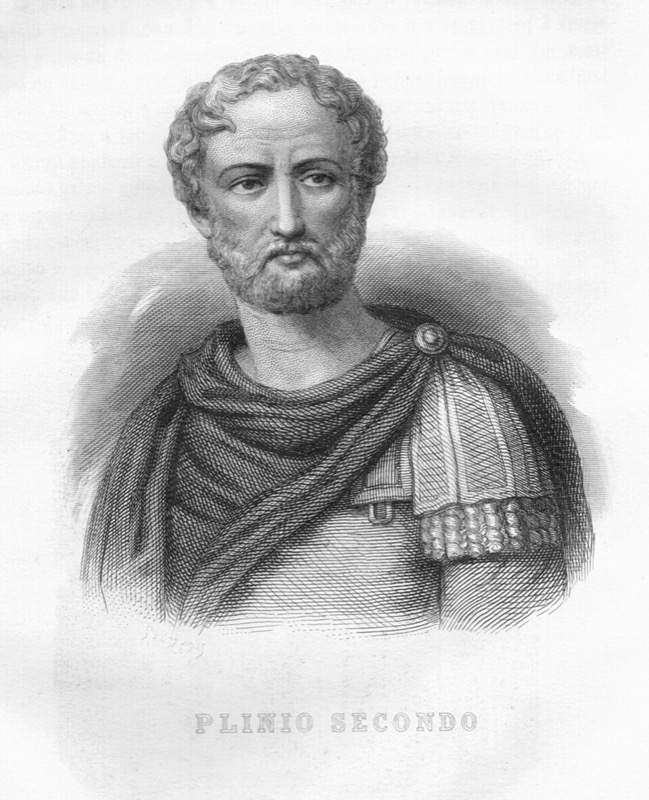

Summary
Natural History: A Selection introduces one of antiquity’s great encyclopedic minds. Pliny wants to collect nature and human use together: stars, lands, peoples, animals, plants, metals, pigments, stones, medicines, marvels and technologies all belong to one vast inventory. His method is compilation, not experiment in the modern sense. He names authorities, repeats reports, weighs some claims and accepts others that later readers find fabulous. The result is uneven and irresistible. A selection usually highlights the most vivid parts: strange animals, monstrous births, medicinal herbs, mining, luxury, art and the moral dangers of human appetite. Medicine runs throughout the Natural History because nearly every natural object can become remedy, poison, food, cosmetic or superstition. Pliny records plant drugs, animal substances, amulets, antidotes, charms, wines, minerals and household cures. He is fascinated by the boundary between useful knowledge and luxury-driven corruption. Nature, in his view, supplies what human beings need, while greed drives them underground for gold, pearls and dangerous excess. For medical history, Pliny preserves a huge archive of folk medicine, elite learning and credulous pharmacology. His entries show Roman healing as a mixture of observation, inherited Greek medicine, rural practice, magic and moral judgment. For psychiatry and psychopharmacology, the work matters through sleep drugs, pain remedies, poisons, aphrodisiacs, hellebore, mandrake, poppy and beliefs about madness or melancholy. Its value is not that Pliny is always right; it is that he records how a learned Roman imagined the entire natural world as a dispensary and a moral test. The encyclopedia’s abundance makes knowledge feel powerful, but also unstable, because the same abundance includes error, wonder and danger. A selection can only hint at the scale of the whole work, but that partial view is still enough to show Pliny’s governing imagination. Nature is abundant, human beings are needy and clever, and knowledge is always shadowed by appetite, fraud, credulity and awe.
Plot or Argument
- Cosmos and earth
Pliny begins from the world as a whole, treating astronomy, geography and natural abundance as one field of inquiry.
- Living nature
Animals, peoples and plants are cataloged for their marvels, uses and moral lessons.
- Materia medica
Plants, animal products, minerals and preparations are repeatedly described as remedies, poisons or protective substances.
- Luxury and technology
Mining, gems, pigments and art show human ingenuity mixed with greed and danger.
- Encyclopedic moralizing
The work turns facts and marvels into judgments about Roman appetite, simplicity and excess.
Lessons
Compilation is a form of power
Pliny gathers the world into Roman prose, making knowledge portable and authoritative. The work teaches both the usefulness and risk of encyclopedic ambition.
- When does collecting become understanding?
- How should readers handle inherited error?
Nature is medicine and temptation
Nearly every substance can heal, poison or seduce human desire. Pliny’s moralism warns that use easily becomes luxury.
- Where does Pliny admire nature most?
- How does moral judgment shape medical advice?
Error has historical value
Pliny’s dubious cures are not useless to historians. They show how evidence, trust and tradition worked before modern trials.
- How can false remedies teach true history?
- What current medical beliefs may look Plinian later?
Context
Pliny wrote under the early Roman Empire, when elite knowledge could draw on Greek texts, imperial travel, military administration and Mediterranean trade.
Composition
The Natural History was dedicated to Titus and published around 77 CE. It contains thirty-seven books and cites many earlier authorities.
Reception
The encyclopedia became a major source for medieval and Renaissance natural history, medicine, art history and lore, even as later science rejected many claims.
Comparisons
- de-materia-medica
Dioscorides is more focused and practical about drugs; Pliny is broader, more moralizing and more willing to preserve marvels.
- the-histories
Like Herodotus, Pliny mixes inquiry, report and wonder, but turns travel curiosity into encyclopedia.
- galen-selected-works
Galen seeks systematic medical authority, while Pliny preserves a looser archive of remedies, substances and beliefs.
Quotes
For Students
A reading companion for classical Christian high school students. See the student guide.
Reading Guide
Watch for
- The preface addressed to the future emperor Titus, where Pliny boasts of the thousands of facts he has gathered from some two thousand volumes and names his sources. Notice how much of the work rests on reading rather than looking.
- The opening of Book VII on the human being, where Pliny asks whether nature is a kind parent or a harsh stepmother to man, who alone is born naked and weeping while other animals are clothed and armed.
- The animal books, especially the elephant at the start of Book VIII, which Pliny credits with something close to human understanding and even religious reverence. Mark where report shades into marvel.
- The medical books on plants and animal remedies, and Pliny's attack in Book XXIX on Greek physicians and their changing theories. Watch how often a cure is followed by a judgment on luxury or fraud.
- Book XXXIII on gold and mining and Book XXXV on painting. In one, men tear open the earth out of greed; in the other, artists such as Apelles and Zeuxis compete in skill. Compare the two kinds of human ingenuity.
Key terms and names
- Naturalis Historia
- Pliny's encyclopedia in thirty-seven books, covering the cosmos, geography, humans, animals, plants, medicines, metals, and stones. Historia here means inquiry or report, not history in our narrow sense.
- Titus
- The son of the emperor Vespasian, to whom Pliny dedicates the work. The dedication presents the encyclopedia as a service to Rome and its rulers.
- Materia medica
- The substances used as medicines. Much of Pliny's middle books catalogue plants, animal products, and minerals according to the ailments they were believed to treat.
- Hellebore
- A poisonous plant used in antiquity as a purge, especially for madness and melancholy. Pliny records its preparation and dangers, and the place of Anticyra where it was famously taken.
- Luxuria
- The Roman vice of extravagant indulgence. Pliny repeatedly blames it for driving men to dig for gold, dive for pearls, and pay fortunes for rare goods that nature never meant them to have.
- Apelles
- The Greek painter whom Pliny in Book XXXV ranks above all others. His contest of fine lines with Protogenes and his advice to a cobbler to stick to his trade are among the work's best-known anecdotes.
- Vesuvius
- The volcano whose eruption in 79 CE killed Pliny, who sailed toward it as commander of the fleet at Misenum. His nephew Pliny the Younger described his death in a letter to Tacitus.
Seminar Questions
- Comprehension In the preface, how does Pliny describe the scope of his work, and how does he say he gathered his material?
- Comprehension What does Pliny say at the beginning of Book VII about how the human being enters the world compared with other animals?
- Comprehension What reasons does Pliny give in Book XXXIII for condemning the search for gold and the practice of mining?
- Interpretation Pliny reports both careful observations and wild marvels, often side by side. Choose one of each from the selection and explain how Pliny seems to decide what is credible.
- Interpretation Why does a book about plants, animals, and stones contain so much moral judgment about luxury and greed? What does Pliny think nature is for?
- Interpretation In Book XXIX Pliny distrusts Greek physicians and praises old Roman household remedies. What does this preference reveal about his view of expertise and tradition?
- Big Question Pliny believed that gathering all knowledge into one place would serve mankind. Is more information always a gain, or does knowledge need an order and a purpose beyond the catalogue?
Faith Connections
- Psalm 104 (Scripture)
The psalmist surveys the springs, grass, wine, oil, cedars, storks, wild goats, and sea creatures, and sees them all as gifts of the Creator who gives them their food in due season. Pliny's catalogue of nature's provision for human need is strikingly similar, though he speaks of Nature where the psalmist speaks to God.
- Job 28 (Scripture)
Job describes men cutting shafts into the rock and bringing hidden gold and sapphires to light, then asks where wisdom can be found and answers that it cannot be bought with gold. Pliny's Book XXXIII makes the same contrast between the miner's daring and the folly of greed.
- Augustine, City of God XVI.8 (Church Fathers)
Augustine takes up the reports of monstrous races, such as one-eyed or dog-headed peoples, that ancient compilers like Pliny passed on. He answers that if such peoples exist and are rational and mortal, they descend from Adam, a model of weighing a pagan natural history by both evidence and doctrine.
- Basil the Great, Hexaemeron (Great Conversation)
In his homilies on the six days of creation, Basil draws on the natural history of his time to describe fish, birds, and beasts and to draw moral lessons from their habits. Basil and Pliny share a habit of reading animals morally, but Basil reads them as works of a wise Creator.
Logic and Rhetoric
Central argument: Nature has provided abundantly for human life, supplying food, medicine, and materials in every land. Knowledge of these gifts is scattered across thousands of books and traditions, so gathering it into one ordered work is a public service. Yet human beings turn nature's gifts into instruments of luxury, poison, and greed, digging into the earth for gold and paying fortunes for pearls. Therefore true knowledge of nature must also teach moderation, and the encyclopedia is both a storehouse and a moral warning.
Rhetorical device: catalogue (enumeratio). Throughout the medical books Pliny lists remedy after remedy drawn from a single plant or animal, ailment by ailment, so that one herb may fill a long run of entries. The sheer accumulation conveys his conviction that nature has provided for every need, while also exposing how much he takes on report.
Debate: Resolved: Pliny's Natural History did more to advance knowledge than to spread error.
Writing Prompts
Essay: Pliny praises nature's generosity and condemns human greed. Using his treatment of medicinal plants, the opening of Book VII, and the attack on gold in Book XXXIII, argue what Pliny believes is the proper relationship between human beings and the natural world.
Comparison with Novum Organum: Francis Bacon called for a new natural history built on experiment and careful exclusion of error, rather than on the collection of reports from authorities. Compare Pliny's method of compilation with Bacon's method of tables and instances, and argue whether Bacon's criticisms are fair to what Pliny was trying to do.
Medical Lens
Pliny is invaluable for Roman materia medica and folk therapeutics. He records plant, animal and mineral remedies, poppy/opium, mandrake, hellebore, amulets and antidotes, often mixing empirical observation with credulity. The work is useful for the history of placebo, quackery, toxicology, sleep remedies and the moral economy of drugs. Retrospective psychiatric use should focus on categories such as madness, melancholy and sleep rather than assuming modern diagnoses.
- Books 20–27
Medicinal plants are cataloged with uses for pain, sleep, wounds, digestion and mental disturbance.
- Book 20, poppy traditions
Poppy preparations appear among sleep- and pain-related remedies, with danger implicit in potency.
- Book 25, hellebore traditions
Hellebore appears in the ancient therapeutic world of purging and treatment of mental disturbance.
- Book 25, mandrake traditions
Mandrake lore connects narcotic, magical and surgical uses.
- Books 28–32
Animal-derived remedies and charms blur medicine, magic and credulity.
Creative Prompts
- Essay
Compare an ancient encyclopedia of remedies with a modern online health forum.
- Classroom
Ask students to classify Pliny entries as observation, tradition, magic, moralizing or pharmacology.
Further Reading
- Natural History, Pliny the Elder
- Pliny the Elder: The Natural History, John F. Healy
- Roman Medicine, John Scarborough
Verification notes
Medical substances are treated at category level; exact book/chapter citations need checking.
- Add verified quotations only after checking the named public-domain translation.
- Confirm book, chapter, letter or rule locators against the intended edition.