Work record
Selected Sermons
1855-1892 · 19th Century · Sermons · English
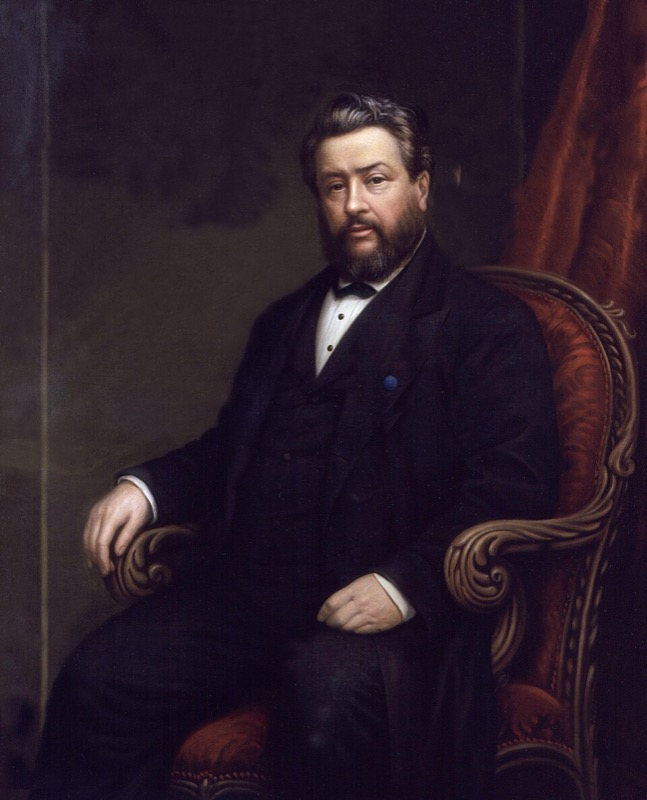

Summary
Spurgeon's Selected Sermons show Victorian evangelical preaching at industrial scale. Week by week, his sermons moved from pulpit to print, reaching readers far beyond the Metropolitan Tabernacle. He preached conversion, Christ's atonement, assurance, prayer, suffering, providence, and practical holiness in language that mixed doctrinal confidence with anecdote, metaphor, and direct appeal. Spurgeon was heir to Puritan and Calvinist traditions, but he understood modern publicity. The printed sermons made him a religious celebrity, while his institutions, including an orphanage, pastors' college, and charitable works, turned preaching into organized social presence. The medical lens is strong because Spurgeon spoke openly about bodily illness, gout, depression, exhaustion, and spiritual despondency. Later readers often note his recurrent melancholy, though retrospective diagnosis should be cautious. His sermons comfort the downcast with unusual tenderness for a preacher famous for confidence. He also ministered in a London marked by poverty, pollution, epidemic memory, and crowded urban life. Historically, his career belongs to Victorian Nonconformity, mass print, urban evangelicalism, and debates over biblical authority. The sermons can be triumphalist, polemical, and sentimental, but they are rarely abstract. Spurgeon wants hearers to decide, trust, endure, and act. Compared with Finney, he distrusts revival technique and stresses divine grace; compared with Moody, he is more doctrinally ornate; compared with Wesley, less methodical about bodily remedies but deeply concerned with suffering souls. His importance lies in the union of old evangelical themes with modern media reach. The sermons read like spoken events carefully preserved for circulation: intimate address multiplied by print. For medical-humanities readers, Spurgeon is valuable because he refuses to make spiritual confidence incompatible with mental anguish. He lets consolation speak from inside weakness, not merely over it. That makes his pulpit unusually humane. His fame did not erase his own vulnerability, and that vulnerability deepened his ministry to the sorrowing.
Plot or Argument
- Victorian preaching enters mass print
Spurgeon's sermons became weekly publications, expanding the pulpit into a transnational reading public.
- Grace answers despondency
Many sermons address guilt, discouragement, illness, and fear through evangelical assurance and Christ-centered consolation.
- The pulpit builds institutions
Spurgeon's preaching supported schools, charitable work, training, and a large urban congregation.
Lessons
Consolation can come from wounded confidence
Spurgeon does not comfort from a place of invulnerability. His experience of illness and despondency gives many sermons a tenderness that complicates his public certainty.
- How does personal suffering change pastoral authority?
- Where does Spurgeon avoid easy optimism?
Print can multiply intimacy
The weekly sermon made direct address portable. Spurgeon shows how mass media can preserve the feeling of personal appeal while creating a large public.
- What changes when a sermon is read rather than heard?
- How does media scale alter pastoral responsibility?
Doctrine can organize charity
Spurgeon's theology did not remain pulpit language. It supported institutions for training, orphan care, and congregational service.
- How does preaching become social infrastructure?
- What are the limits of charity rooted in one preacher's charisma?
Context
Spurgeon preached in Victorian London, a setting of rapid urban growth, poverty, Nonconformist activism, religious controversy, and expanding mass print.
Composition
His sermons were preached orally and then published in regular series across decades, often revised from shorthand reports.
Reception
He became one of the most widely read preachers in the English-speaking world, admired for evangelical power and criticized for polemical certainty.
Comparisons
- lectures-on-revivals-of-religion
Finney treats revival as something that can be promoted by proper means; Spurgeon stresses proclamation, grace, and pastoral consolation.
- moody-selected-sermons
Moody shares Spurgeon's popular evangelical reach, but his style is plainer and more campaign-oriented.
- the-anatomy-of-melancholy
Burton anatomizes melancholy as scholar-physician; Spurgeon consoles despondency from within evangelical preaching.
Quotes
For Students
A reading companion for classical Christian high school students. See the student guide.
Reading Guide
Watch for
- The opening of The Immutability of God (No. 1, January 1855) on Malachi 3:6, where the twenty-year-old preacher sets the study of God against the boasts of the naturalist and the geologist and argues that this study both humbles and enlarges the mind.
- Sweet Comfort for Feeble Saints (No. 6) on the bruised reed and smoking flax of Matthew 12:20, which begins by contrasting the bold men fame loves, such as Luther and Knox, with gentle figures such as Melanchthon and Archbishop Leighton, and then places Jesus among the gentle.
- Consolation Proportionate to Spiritual Sufferings (No. 13), preached at Exeter Hall on 2 Corinthians 1:5. Notice the four-part division announced at the start and the image of the dishonest recruiting sergeant who hides the hardships of the service, set against Christ who tells his soldiers to count the cost.
- The habit, in nearly every sermon, of announcing numbered heads (I, II, III) and then turning in the closing pages to direct appeal, often to different groups of hearers in turn: the believer, the doubter, the careless.
- The settings named at the head of each sermon, New Park Street Chapel in Southwark and the rented Exeter Hall in the Strand, which show a young preacher whose crowds had already outgrown his chapel.
Key terms and names
- New Park Street Chapel
- The Baptist chapel in Southwark where Spurgeon became pastor in 1854 at nineteen. Most sermons in this 1855 volume were preached there, and its crowds soon forced the congregation into larger halls.
- Exeter Hall
- A large public hall in the Strand used for religious and philanthropic meetings. Spurgeon's congregation met there while New Park Street was being enlarged, and several sermons in the volume were preached there.
- Metropolitan Tabernacle
- The great church at the Elephant and Castle, opened in 1861, built to hold Spurgeon's congregation. It became the center of his later ministry and his college and orphanage.
- The New Park Street Pulpit
- The weekly penny printing of Spurgeon's sermons, begun in January 1855 and later continued as The Metropolitan Tabernacle Pulpit. It carried each Sunday's sermon to readers across Britain and abroad, and its numbering (No. 1, No. 2) is the numbering of this volume.
- Divisions (heads)
- The numbered parts into which Spurgeon breaks each text, such as the four heads of Consolation Proportionate to Spiritual Sufferings. They let a hearer follow and remember the argument.
- Immutability
- The doctrine that God does not change in his being, purposes, or promises. In Sermon No. 1 Spurgeon draws from it the comfort that, because God does not change, his people are not consumed.
- Nonconformist
- A Protestant outside the established Church of England, such as a Baptist, Congregationalist, or Methodist. Spurgeon was the most famous Nonconformist preacher of Victorian England.
Seminar Questions
- Comprehension In The Immutability of God, what reasons does Spurgeon give for saying that the study of God is the highest science, and how does he compare it with natural science?
- Comprehension In Sweet Comfort for Feeble Saints, what do the bruised reed and the smoking flax stand for, and what kinds of people does Spurgeon say they describe?
- Comprehension What are the four heads of Consolation Proportionate to Spiritual Sufferings, and how does the recruiting sergeant illustration fit the first of them?
- Interpretation Spurgeon begins Sweet Comfort for Feeble Saints by contrasting famous men of iron with forgotten gentle men. Why does he open a sermon of comfort with a meditation on fame, and how does it prepare his picture of Christ?
- Interpretation In Consolation Proportionate to Spiritual Sufferings Spurgeon promises not that suffering will be removed but that comfort will match it. Is that a stronger or weaker comfort than a promise of relief?
- Interpretation These sermons were spoken to a crowd and then printed for readers who never saw Spurgeon. Which features of the sermons, such as the numbered heads, the direct address, and the homely illustrations, work better aloud and which better on the page?
- Big Question Should a preacher comfort the weak or challenge the strong first, and can a single sermon do both?
- Big Question Does knowing God humble the mind, enlarge it, or both, as Spurgeon claims at the start of his first printed sermon?
Faith Connections
- Isaiah 42:1-4 and Matthew 12:18-21 (Scripture)
Matthew applies Isaiah's servant song to Jesus, who will not break the bruised reed or quench the smoking flax. Spurgeon's Sweet Comfort for Feeble Saints builds its whole consolation on this gentleness, which he sets against the world's admiration for men of iron.
- 2 Corinthians 1:3-7 (Scripture)
Paul blesses the God of all comfort, who comforts us in affliction so that we can comfort others, and whose consolation abounds as sufferings abound. This passage is the text and the structure of Consolation Proportionate to Spiritual Sufferings.
- Gregory the Great, Pastoral Care (Regula Pastoralis), Part III (Church Fathers)
Gregory teaches that the preacher must address the timid and the bold, the sad and the joyful, each differently. Spurgeon's habit of turning in his closing appeals to distinct groups of hearers belongs to this old pastoral tradition.
- John Bunyan, The Pilgrim's Progress (Great Conversation)
Spurgeon loved Bunyan and drew on the same Puritan world of Mr. Feeble-mind, Mr. Despondency, and Mr. Ready-to-halt in Part Two, weak pilgrims whom Great-heart protects. Sweet Comfort for Feeble Saints is a sermon for exactly such travelers.
Logic and Rhetoric
Central argument: Consolation Proportionate to Spiritual Sufferings argues: Christians must expect suffering, because they share in the sufferings of Christ; these sufferings are distinct from mere misfortune because they are borne in union with him; God measures comfort to the measure of such suffering; therefore the believer can face affliction without despair and should give the honor for every consolation to Christ. The 1855 sermons as a whole rest on a wider claim, stated in The Immutability of God, that because God does not change, his promises to the weak can be trusted.
Rhetorical device: antithesis. At the opening of Sweet Comfort for Feeble Saints Spurgeon sets the iron men whom fame celebrates, Caesar, Luther, and Knox, against the gentle Melanchthon, Rutherford, and Leighton whom she forgets, and the contrast prepares the reader to see Christ's gentleness toward the bruised reed as a kind of greatness the world overlooks.
Debate: Resolved: A sermon should comfort the hearer more than it challenges him.
Writing Prompts
Essay: Spurgeon is remembered as a bold and confident preacher, yet several of his first printed sermons are addressed to the weak and the suffering. Using Sweet Comfort for Feeble Saints and Consolation Proportionate to Spiritual Sufferings, argue how Spurgeon understands the relation between strength and weakness in the Christian life.
Comparison with Sinners in the Hands of an Angry God and A Faithful Narrative: Edwards and Spurgeon both stand in the Calvinist tradition and both preached to crowds in times of revival. Compare the way Sinners in the Hands of an Angry God presses the unconverted with the way Sweet Comfort for Feeble Saints addresses the discouraged believer, and argue what each sermon assumes about how the human heart is moved toward God.
Medical Lens
Spurgeon is highly relevant because of his own bodily illness and depressive suffering, plus his pastoral attention to despondency. Interpretations should avoid simplistic retrospective diagnosis while noting the historical importance of religious consolation for mental pain.
- Sermons addressed to the downcast
Spurgeon repeatedly offers consolation to hearers experiencing despair, guilt, grief, and spiritual darkness.
- Autobiographical allusions to illness and pain
His own suffering informs pastoral speech about endurance and weakness.
Creative Prompts
- Essay
Study Spurgeon as a preacher whose public confidence coexisted with private despondency.
- Dialogue
Let Spurgeon and Burton discuss melancholy, consolation, and the usefulness of doctrine.
Further Reading
Verification notes
The London ministry, printed sermon series, institutions, and health struggles are secure. Direct sermon quotations are omitted pending verification.
- Check exact sermon titles and publication dates before adding quoted material.