Work record
Farewell Address and Selected Letters
1775-1799 · 18th Century · Political Theory · English

Summary
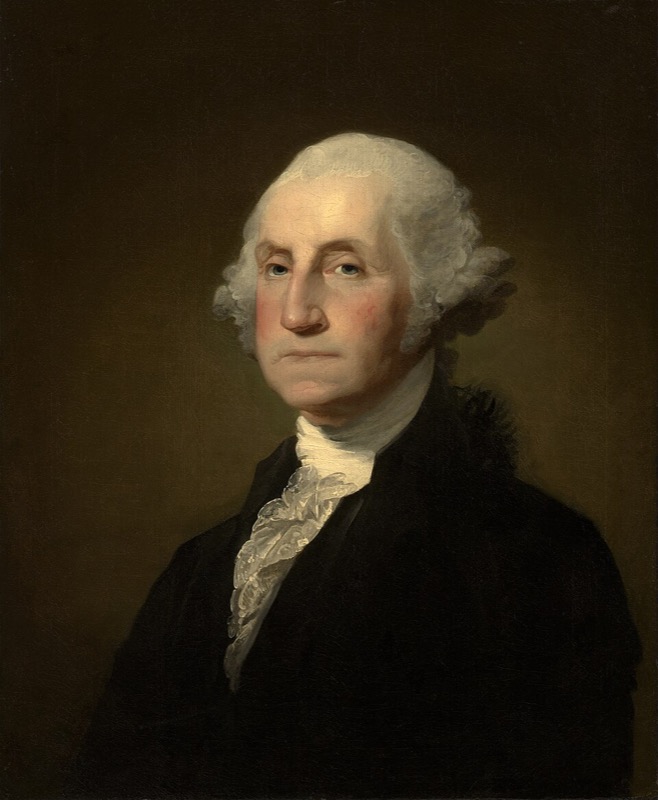
Washington's Farewell Address and selected letters present leadership as restraint, reputation, and institutional precedent. The Farewell Address, published in 1796 near the end of his presidency, warns against sectional division, party spirit, foreign entanglement, public debt, and attacks on constitutional authority. It is less a personal goodbye than a civic testament. Washington uses his prestige to urge union and moderation in a young republic already strained by partisanship and international conflict. The selected letters broaden the figure beyond marble. Wartime correspondence shows logistical frustration, disease in camps, shortages, discipline, military hierarchy, and the burden of holding an army together. Presidential letters show concern with precedent, neutrality, executive authority, Native policy, and faction. Private letters reveal estate management, slavery, illness, family, and reputation. The medical lens is moderate because Washington's career is full of bodily realities: smallpox, camp disease, inoculation policy during the Revolution, wounds, exhaustion, dental suffering, and his fatal throat illness in 1799 with aggressive bleeding. His leadership cannot be separated from eighteenth-century military medicine and plantation health. Historically, the writings span the Revolutionary War, constitutional founding, early presidency, and the creation of republican norms. Washington's symbolic power came partly from leaving power: resigning his commission and stepping down after two terms. The same writings also record slavery, plantation management, Native policy, and territorial expansion alongside the union he urged Americans to preserve. Compared with Adams, Washington is less theoretical; compared with Madison, less analytical; compared with Paine, less incendiary. His genius is performative steadiness. He made republican authority credible by staging self-command while operating within the institutions of the early republic. The letters make that performance harder and more human by showing fatigue, calculation, irritation, and the health burdens beneath public composure. The selection therefore turns an icon back into a working, suffering administrator whose body mattered to the state.
Plot or Argument
- Farewell becomes civic instruction
Washington warns against party spirit, sectionalism, foreign dependence, debt, and disregard for constitutional order.
- War letters expose bodily command
Revolutionary correspondence shows shortages, disease, discipline, and the practical strain of sustaining an army.
- Presidential letters create precedent
Washington's executive correspondence reveals a leader conscious that every action may become a model.
Lessons
Leaving power can found authority
Washington's restraint mattered as much as his command. By stepping down, he made republican power seem governable by norms rather than appetite.
- Why did resignation become part of Washington's authority?
- Can restraint be a political act?
Union includes conflict and exclusion
The Farewell Address fears disunion, and the letters show a republic that also included slavery, expansion, and contested Native policy. Stability appears as a political aim within those historical conditions.
- What does Washington's union protect?
- What conflicts sit behind national stability?
Leadership is bodily labor
The letters show command as endurance through disease, fatigue, pain, and logistical distress. Public steadiness rests on physical and emotional strain.
- How do illness and exhaustion shape military leadership?
- What does the heroic image hide?
Context
The writings span the Revolutionary War, the Constitutional Convention's aftermath, Washington's presidency, neutrality debates, party conflict, and the early republic.
Composition
The Farewell Address was published in 1796 with drafting assistance from Madison and Hamilton; letters come from Washington's military, presidential, and private life.
Reception
The Address became a canonical statement of American civic warning, while Washington's letters add administrative detail, plantation management, illness, and Native policy to the public icon.
Comparisons
- the-federalist-papers
Publius theorizes the Constitution; Washington's presidency tests how constitutional authority becomes precedent.
- personal-memoirs
Grant and Washington both reveal military leadership as logistics, endurance, reputation, and bodily risk.
- narrative-and-fourth-of-july
Douglass analyzes the racial limits of founding-era liberty language that Washington urged Americans to preserve as national inheritance.
Quotes
For Students
A reading companion for classical Christian high school students. See the student guide.
Reading Guide
Watch for
- The opening paragraphs of the Farewell Address, where Washington explains why he declines a third term and offers his counsel as a departing friend with nothing left to gain from office.
- The long middle section on the Union, where Washington names the North and South, the Atlantic states and the Western country, and shows what each region gains from the others before warning against parties drawn along geographical lines.
- The passage on the spirit of party, which Washington calls natural to human passions and compares to a fire that must be watched so that it warms without consuming.
- The paragraph calling religion and morality indispensable supports of political prosperity, with its argument about oaths in courts of justice and its doubt that national morality can last without religious principle.
- Outside the Address: the 1777 letters ordering inoculation of new recruits against smallpox, and Tobias Lear's diary of Washington's last illness in December 1799, with his repeated bleedings and calm final words.
Key terms and names
- Farewell Address
- Washington's public letter of September 1796 announcing that he would not seek a third term. It was printed in a Philadelphia newspaper rather than delivered as a speech, and drew on an earlier draft Madison prepared in 1792 and on Hamilton's later revisions.
- Spirit of party
- Washington's name for the passion that binds men to a faction above the common good. He argues that in a popular government it cannot be abolished, only restrained, because it grows from human nature itself.
- Union
- In the Address, the unity of government among the states, which Washington calls the main pillar of American independence, peace, safety, and liberty. Every later warning in the Address is a warning about what could break it.
- Permanent alliances
- Washington's counsel to steer clear of lasting political ties with any part of the foreign world while extending commerce with all nations. He warns that habitual fondness or hatred toward one nation makes a people a slave to its own passion.
- Public credit
- The government's ability to borrow, which Washington urges Americans to cherish by using it sparingly, paying in peace the debts that war made necessary, and accepting the taxes that payment requires.
- Inoculation
- The eighteenth-century practice of deliberately infecting a person with matter from a smallpox pustule to produce a milder case and lasting immunity. In early 1777 Washington ordered the army's new recruits inoculated, with Dr. William Shippen directing the work.
- Tobias Lear
- Washington's private secretary, whose diary records the throat infection that killed Washington at Mount Vernon on 14 December 1799, the bleedings his physicians ordered, and his last instructions about his burial.
Seminar Questions
- Comprehension What reasons does Washington give at the start of the Farewell Address for declining another term, and how does he describe his own abilities and errors?
- Comprehension According to the Address, what does each region of the country, North, South, East, and West, gain from union with the others?
- Comprehension What does Tobias Lear's diary record about the treatments Washington's physicians used in his final illness, and how did Washington behave as he was dying?
- Interpretation Washington says party spirit cannot be extinguished in a free government, only kept from bursting into flame. Why does he treat it as a fire to be watched rather than an enemy to be destroyed?
- Interpretation Washington ties religion to the security of property, reputation, and life by pointing to the oaths sworn in courts of justice. What does this argument show about how he thought a republic actually functions day to day?
- Interpretation In 1777 Washington chose to inoculate his recruits even though the procedure made men sick for weeks in the middle of a war. What does this decision reveal about the kind of judgment he believed command required?
- Interpretation Washington insists that the Constitution must be obeyed until it is changed by lawful amendment, and he warns against changes made by usurpation even when they seem useful. Why would a man who had led a revolution argue this way?
- Big Question Washington believed a free people keeps its liberty only through the self-restraint of both citizens and rulers. If a people loses those habits, can good laws alone preserve a republic?
Faith Connections
- Matthew 12:25 (Scripture)
Jesus says that every city or house divided against itself shall not stand. Washington's warnings against geographical parties and the spirit of faction apply the same logic to a federal union of states.
- Proverbs 14:34 (Scripture)
The proverb that righteousness exalts a nation stands behind the Address's claim that religion and morality are indispensable supports of political prosperity. Washington argues the point from experience and prudence rather than from Scripture, which makes the agreement worth examining.
- Romans 13:1-8 (Scripture)
Paul teaches respect for governing authorities, the paying of taxes and dues, and owing no one anything but love. The Address's counsel to obey the established Constitution and to pay public debts promptly, even through unwelcome taxes, follows a similar line of civic duty.
- Augustine, City of God XIX (Church Fathers)
Augustine calls peace the tranquility of order and teaches that the heavenly city makes use of the earthly city's peace while on pilgrimage. Washington's Union is exactly such an earthly peace, a real good that he guards carefully without claiming that it is the highest good.
Logic and Rhetoric
Central argument: American liberty depends on the union of the states under the Constitution. That union is threatened by sectional jealousy, the spirit of party, attachment or hostility toward foreign nations, careless public debt, and the decay of religion and morality. Each of these dangers can be restrained by citizens who prefer the whole to the part and by leaders who respect lawful limits. Therefore Americans should cherish the Union, obey the Constitution until it is changed by amendment, use public credit sparingly, deal justly and commercially with all nations while avoiding permanent alliances, and preserve the religious and moral habits on which free government rests.
Rhetorical device: extended metaphor. At the close of the section on party spirit, Washington describes it as a fire that cannot be quenched and so demands constant vigilance, lest instead of warming it should consume. The image concedes that partisanship has some use while making its danger feel physical and immediate.
Debate: Resolved: Washington was wrong to warn against political parties, because organized parties are necessary for a free people to govern itself.
Writing Prompts
Essay: Washington says a free government depends both on its Constitution and on the religion and morality of its people. Using the Address's sections on the Union, the spirit of party, and public credit, argue whether Washington's advice is chiefly about institutions or chiefly about the character of citizens.
Comparison with The Federalist Papers: In Federalist No. 10 Madison argues that faction cannot be removed without destroying liberty and must instead be controlled by an extended republic; nine years later Washington treats party spirit as a fire to be watched by vigilant citizens. Compare their diagnoses of faction and argue which remedy better fits what the young republic actually needed.
Medical Lens
Washington matters medically through smallpox inoculation policy, camp disease, military medicine, dental pain, and his final illness treated with bloodletting. The letters put leadership inside bodily vulnerability.
- Revolutionary War letters on army health
Camp disease, supply shortages, and inoculation decisions show public health as military necessity.
- Final illness correspondence and accounts
Washington's death after severe throat illness and bloodletting reflects eighteenth-century medical practice.
Creative Prompts
- Essay
Study Washington's leadership as bodily endurance rather than marble composure.
- Dialogue
Let Washington and a military physician debate inoculation, morale, and command responsibility.
Further Reading
Verification notes
The Farewell themes, two-term precedent, wartime disease issues, and final illness are secure. Quotes are omitted pending source selection.
- Verify exact letters and medical details before adding quotations or specific locators.