Work record
The Art of War
c. 5th century BCE · Ancient · Philosophy · Chinese
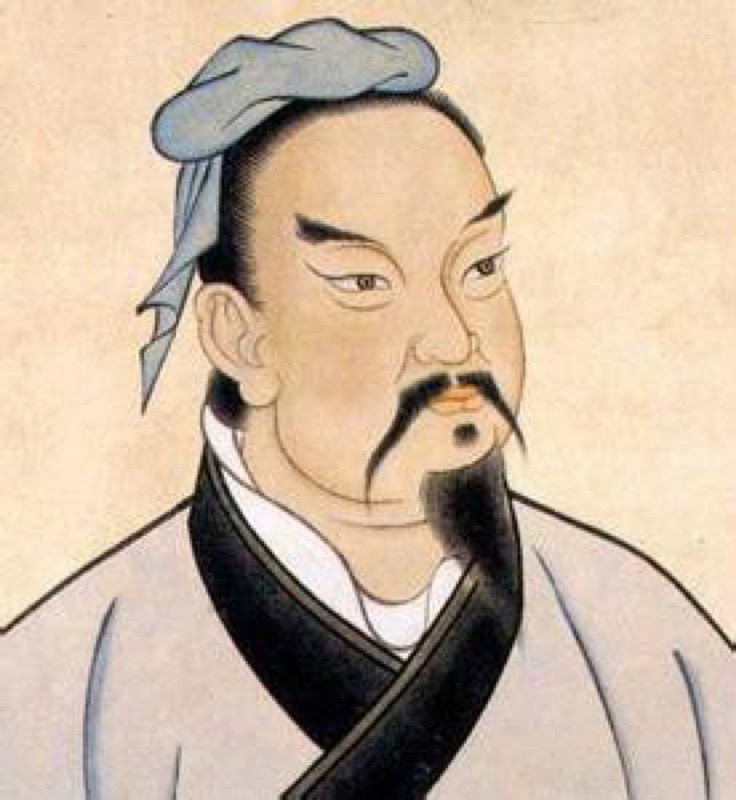

Summary
The Art of War is a short treatise of thirteen chapters, around six thousand Chinese characters, written as a sequence of terse sayings introduced by the formula 'Sun Tzu said'. It begins by declaring war a matter of life and death for the state, to be studied through five constant factors: the moral law that binds people to their ruler, heaven (weather and seasons), earth (terrain and distance), the commander's qualities, and method and discipline. Calculation in the temple before any fighting decides which side will win, and the first chapter ends with the most famous principle of the book, that all warfare is based on deception. The second chapter counts the cost of a campaign in chariots, armour, provisions and silver, and warns that no state has ever benefited from prolonged war; the wise general feeds his army on the enemy's grain. The third chapter states the highest ideal: to take the enemy's state whole rather than destroy it, and to break resistance without fighting. Attacking strategy and alliances is better than attacking armies, and besieging walled cities is the worst policy. It closes with the maxim that one who knows the enemy and knows himself need not fear a hundred battles. The middle chapters turn from policy to the dynamics of force. Tactical dispositions describe making oneself invulnerable and waiting for the enemy to offer an opportunity. Energy describes combining direct and indirect forces, the zheng and qi, in endless permutations, like a torrent that rolls stones. Weak points and strong teaches shaping the enemy while remaining formless, and compares an army to water, which has no constant shape. Manoeuvring, variation of tactics and the army on the march deal with the dangers of marching to seize advantage, the commands a general may disobey, the five dangerous faults of character in a commander, the reading of signs in dust, birds and enemy behaviour, and the choice of healthy high ground for camps. Terrain and the nine situations classify ground by its strategic effect, including desperate ground where troops fight hardest because they have no escape, and advise treating soldiers like beloved sons while keeping them ignorant of the plan. The chapter on attack by fire lists five kinds of incendiary attack and then warns rulers never to make war out of anger, because the dead cannot be brought back to life. The final chapter, on spies, argues that foreknowledge cannot come from spirits or analogy but only from people, and classifies five kinds of agents, praising the converted spy most of all. Lionel Giles's 1910 translation, used here, prints the text with extensive extracts from classical Chinese commentators such as Cao Cao, Du Mu and Mei Yaochen, so that the book reads as an ongoing conversation about strategy across a millennium.
Plot or Argument
- I. Laying Plans
The five constant factors and seven comparisons by which victory can be forecast before battle; war as the way of deception, feigning weakness when strong and disorder when ordered.
- II–III. Waging War and Attack by Stratagem
The economic cost of war and the case for speed; living off the enemy; the hierarchy that ranks defeating strategy above defeating alliances, armies and cities; the ruler who meddles with the army; knowing the enemy and oneself.
- IV–VI. Dispositions, Energy, Weak Points and Strong
Invulnerability is in one's own hands while victory depends on the enemy's mistakes; the interplay of direct and indirect forces; concentration against dispersion; formlessness, and tactics shaped like water to the ground and the foe.
- VII–VIII. Manoeuvring and Variation of Tactics
The difficulty of turning the devious into the direct; gongs, drums and banners to unify perception; roads not to be followed and commands not to be obeyed; the five dangerous faults of a general.
- IX. The Army on the March
Camping on high, sunny, dry ground near water and pasture to avoid disease; reading the enemy from birds, dust, envoys and the behaviour of his soldiers; discipline that combines humanity with firmness.
- X–XI. Terrain and the Nine Situations
Six kinds of terrain and six calamities caused by the general; nine strategic situations from dispersive to desperate ground; throwing troops into positions from which there is no escape so that they fight to the death.
- XII. The Attack by Fire
Five methods of attack by fire and the conditions of weather that favour them, followed by the warning that a ruler must not go to war in anger, since a destroyed state and the dead cannot be restored.
- XIII. The Use of Spies
Foreknowledge as the basis of victory; local, inward, converted, doomed and surviving spies; generous reward and secrecy; spies as the most important element in war.
Characters
- Sun Tzu (Sun Wu), speaking master
The voice of the sayings, traditionally a general of Wu; the text gives no personal narrative.
- King Helü of Wu, ruler in the traditional biography
In Sima Qian's anecdote, reprinted in Giles's introduction, he lets Sun Tzu drill his palace women and loses two favourite concubines to the general's discipline.
- Cao Cao (Ts'ao Kung), commentator
Warlord and founder of the Wei state whose notes are the earliest surviving commentary.
- Du Mu, Mei Yaochen, Zhang Yu and others, commentators
Tang and Song scholars whose glosses, quoted by Giles, supply historical examples and alternative readings.
- Lionel Giles, translator
British Museum sinologist whose 1910 edition corrected the earlier Calthrop translation and set the English standard.
Lessons
The best victory is the one that needs no battle
Chapter III ranks strategies by how little destruction they require: frustrate the enemy's plans, then his alliances, then his armies, and only as the worst choice his walled cities. Force is a cost to be minimised, and a whole enemy state taken intact is the highest prize.
- Is breaking resistance without fighting a humane ideal or simply an efficient one?
- Why does Sun Tzu treat sieges as the worst policy?
- Where in modern conflict do we see this hierarchy followed or ignored?
Deception and formlessness
Warfare is based on deception: appear weak when strong, distant when near, disordered when disciplined. The ideal army has no fixed shape for an opponent to read, adapting to circumstances as water adapts to ground.
- How does Sun Tzu's idea of formlessness relate to his emphasis on precise calculation?
- Can a commander deceive the enemy without also deceiving his own troops?
Temperament is a strategic vulnerability
Chapter VIII lists five faults that ruin generals: recklessness, cowardice, a hasty temper, an excessive sense of honour, and over-solicitude for the men. Each is a virtue or feeling pushed too far, and each gives the enemy a lever to pull.
- Why would concern for one's soldiers appear on a list of dangerous faults?
- How might an enemy exploit a general who is sensitive to shame?
- Compare the five faults with modern accounts of decision-making under stress.
Never fight from anger
Chapter XII ends by insisting that no ruler should go to war because of rage or resentment. Feelings pass, but a ruined state and the dead are beyond recovery, so caution in starting wars is the foundation of keeping a country at peace.
- How does this warning sit alongside the book's instructions for incendiary attack?
- Why does Sun Tzu make emotional regulation a duty of the ruler rather than a private virtue?
Information must come from people
The chapter on spies rejects divination, analogy and calculation as sources of knowledge about the enemy's intentions. Only human agents provide foreknowledge, and the most valuable is the enemy's own spy turned to one's service.
- Why does Sun Tzu reward spies more generously than any other soldier?
- What ethical problems does the 'doomed spy' raise?
Context
The text belongs to the Warring States period (c. 475–221 BCE), when the old aristocratic chariot warfare of the Zhou states gave way to mass infantry armies raised by centralising kingdoms, and when Confucian, Mohist, Daoist and Legalist schools competed for rulers' attention. Military thought became a recognised branch of learning, and the Art of War later headed the Seven Military Classics compiled under the Song dynasty in the eleventh century.
Composition
Tradition dates the work to Sun Wu at the court of Wu around 500 BCE, but its references to large standing armies and crossbows suggest Warring States composition. The bamboo-slip manuscripts excavated at Yinqueshan in 1972 date from the second century BCE and also preserved a separate text attributed to Sun Bin. Cao Cao's commentary (c. 200 CE) fixed the thirteen-chapter form. The first European translation was the French version of the Jesuit Joseph-Marie Amiot (1772); Lionel Giles's English translation with commentary appeared in 1910.
Reception
The book shaped strategic thought across East Asia for two thousand years and was studied in Japan from the eighth century. Mao Zedong drew on it in his writings on guerrilla and protracted war. In the West its influence grew after the Second World War through Basil Liddell Hart and Samuel Griffith's 1963 translation, and since the 1980s it has been widely applied, often loosely, to business, sport, law and self-help.
Comparisons
- the-arthashastra
Kautilya's Indian treatise shares Sun Tzu's statecraft of spies, alliances and calculated deception, but is vastly longer and administrative, treating war as one department of a comprehensive science of government.
- on-war
Clausewitz makes friction, chance and the decisive battle central and treats war as a continuation of policy; Sun Tzu prizes victory without battle and believes calculation and deception can control outcomes that Clausewitz thinks fundamentally uncertain.
- the-prince
Machiavelli and Sun Tzu both detach advice to rulers from conventional morality and praise deception, but Machiavelli writes about seizing and holding a principality, Sun Tzu about the calculated use of armies between states.
- the-art-of-war-machiavelli
Machiavelli's dialogue of the same English title argues for citizen militias on the Roman model; set beside Sun Tzu, it shows how differently two traditions imagined the relation between soldier, ruler and state.
- napoleons-maxims-of-war
Napoleon's maxims share Sun Tzu's aphoristic form and emphasis on speed and concentration, but they come from a commander's experience of decisive battle rather than an ideal of avoiding it.
- the-history-of-the-peloponnesian-war
Thucydides shows a long war ruining both Athens and its rivals, an extended historical illustration of Sun Tzu's warning that no state has ever profited from prolonged war.
Quotes
Frequently cited
“All warfare is based on deception”
Frequently cited
“Hence to fight and conquer in all your battles is not supreme excellence; supreme excellence consists in breaking the enemy’s resistance without fighting”
Frequently cited
“If you know the enemy and know yourself, you need not fear the result of a hundred battles. If you know yourself but not the enemy, for every victory gained you will also suffer a defeat”
“Sun Tzŭ said: The art of war is of vital importance to the State”
“There is no instance of a country having benefited from prolonged warfare”
“To secure ourselves against defeat lies in our own hands, but the opportunity of defeating the enemy is provided by the enemy himself”
“Therefore, just as water retains no constant shape, so in warfare there are no constant conditions”
“5) over-solicitude for his men, which exposes him to worry and trouble”
“and camp on hard ground, the army will be free from disease of every kind”
“Regard your soldiers as your children, and they will follow you into the deepest valleys; look on them as your own beloved sons, and they will stand by you even unto death”
“Soldiers when in desperate straits lose the sense of fear. If there is no place of refuge, they will stand firm”
“Anger may in time change to gladness; vexation may be succeeded by content”
“Knowledge of the enemy’s dispositions can only be obtained from other men”
For Students
A reading companion for classical Christian high school students. See the student guide.
Reading Guide
Watch for
- The five constant factors and the calculations made in the temple in Chapter I, which claim that victory can be forecast before an army ever marches.
- The ranking in Chapter III of what to attack: first the enemy's plans, then his alliances, then his armies, and last and worst his walled cities.
- The image of water in Chapter VI, which takes the shape of the ground it flows over, as Sun Tzu's picture of the formless army.
- The five dangerous faults of a general in Chapter VIII. Notice that several of them, such as a delicate sense of honor or concern for one's men, look like virtues.
- The sudden moral warning at the end of Chapter XII, after instructions for attack by fire, that no ruler should go to war in anger because the dead cannot be brought back.
Key terms and names
- The five constant factors
- The Moral Law, Heaven, Earth, the Commander, and Method and Discipline, set out in Chapter I. Comparing two states on these points is how Sun Tzu says a wise ruler forecasts victory.
- The Moral Law
- In Chapter I, the bond that makes the people one with their ruler, so that they will follow him regardless of danger. It is the first of the five factors, placed before weather, ground, and generalship.
- Direct and indirect force
- In Chapter V, the ordinary forces that engage the enemy and the extraordinary forces that surprise him, called zheng and qi in Chinese. Sun Tzu says their combinations are endless, like the notes of music or the colors of painting.
- Desperate ground
- In Chapter XI, a position from which there is no escape, where soldiers lose fear and fight to the death. Sun Tzu advises placing troops there deliberately.
- Converted spy
- In Chapter XIII, the enemy's own agent turned to one's service. Sun Tzu ranks him as the most valuable of the five kinds of spy because he makes the others possible.
- The commentators
- Cao Cao, Du Mu, Mei Yaochen, and others whose notes Giles prints alongside the text. They supply examples from Chinese history and sometimes disagree about what Sun Tzu meant.
Seminar Questions
- Comprehension What are the five constant factors in Chapter I, and why does Sun Tzu list the Moral Law first?
- Comprehension In Chapter II, why does Sun Tzu say no country has ever benefited from prolonged warfare, and what does he advise about feeding an army?
- Comprehension What are the five dangerous faults of a general in Chapter VIII?
- Interpretation Sun Tzu says all warfare is based on deception, yet he also asks that the people be bound to their ruler by the Moral Law. Can a ruler deceive his enemies without corrupting the trust of his own people?
- Interpretation Why does Sun Tzu count over-solicitude for one's men as a fault, while in Chapter X he tells the general to regard his soldiers as beloved sons? How can both be true?
- Interpretation In Chapter IV Sun Tzu says securing ourselves against defeat lies in our own hands, but the chance to defeat the enemy is given by the enemy. What does this distinction teach about patience and about the limits of control?
- Big Question Is breaking the enemy's resistance without fighting the highest moral ideal of war, or only the most efficient one? Does it matter which?
Faith Connections
- Luke 14:31-32 (Scripture)
Jesus describes a king who sits down first to consider whether ten thousand can meet twenty thousand, and who sends a delegation to ask for peace if they cannot. It is the same calculation before battle that Sun Tzu's Chapter I demands, used by Jesus to teach the cost of discipleship.
- Proverbs 16:32 (Scripture)
He who is slow to anger is better than the mighty, and he who rules his spirit than he who takes a city. Sun Tzu's warning in Chapter XII against war made in anger reaches the same conclusion from the side of statecraft.
- Joshua 8 (Scripture)
At Ai, Joshua sets an ambush behind the city and draws its defenders out by a feigned retreat. The episode is a biblical instance of the stratagems Sun Tzu teaches, such as appearing weak when strong and luring the enemy from a defended position.
- Aquinas, Summa Theologiae II-II, q. 40, a. 3 (Great Conversation)
Aquinas asks whether it is lawful to lay ambushes in war and, following Augustine on Joshua at Ai, answers that concealing one's plans is lawful but lying and breaking faith with an enemy are not. His distinction gives students a precise way to test Sun Tzu's claim that all warfare is based on deception.
Logic and Rhetoric
Central argument: War is of vital importance to the state, a matter of life and death, and it is enormously costly. Victory can be calculated in advance by comparing the two sides on the five constant factors and by knowing both the enemy and oneself. Since every battle spends lives and treasure and every battle carries risk, the best general wins by deception, positioning, and the disruption of the enemy's plans and alliances. Therefore supreme excellence lies in breaking the enemy's resistance without fighting, and war should never be begun from anger.
Rhetorical device: simile. In Chapter VI Sun Tzu concludes, "just as water retains no constant shape, so in warfare there are no constant conditions." The comparison turns an abstract principle of adaptability into an image every reader has seen, and it gathers up the chapter's earlier instructions about shaping oneself to the enemy.
Debate: Resolved: Deceiving an enemy in war is always morally permissible.
Memory Work
If you know the enemy and know yourself, you need not fear the result of a hundred battles. If you know yourself but not the enemy, for every victory gained you will also suffer a defeat
Hence to fight and conquer in all your battles is not supreme excellence; supreme excellence consists in breaking the enemy’s resistance without fighting
Writing Prompts
Essay: Chapter I says all warfare is based on deception, and Chapter XII forbids going to war in anger. Using these chapters and Chapter III's ideal of victory without fighting, argue whether Sun Tzu's teaching is fundamentally amoral, or whether it rests on a moral view of war's costs.
Comparison with On War: Sun Tzu believes calculation before battle can forecast victory and that the best victory needs no fighting; Clausewitz stresses friction, chance, and the decisive engagement. Compare their views of how far war can be controlled by reason, and argue which better accounts for what happens once armies meet.
Medical Lens
Medical content is sparse but real. Chapter IX gives early camp-hygiene advice: high, sunny, dry ground near fresh water keeps an army free of disease, and the commentators gloss low ground as damp and unhealthy, reflecting a widespread ancient association between marsh and sickness. The psychology of the book is more substantial for a psychiatric reader. The five dangerous faults of a general read as an early typology of how temperament distorts judgment under pressure; the account of desperate ground describes how fear is abolished when escape is impossible; and the warning against war in anger treats emotional regulation as a public duty. These links are interpretive: Sun Tzu writes about strategy, not medicine.
- Ch. VIII.12–14
Five dangerous faults of a general (recklessness, cowardice, hasty temper, sensitivity to shame, over-solicitude for his men), with commentators' examples of generals ruined by each.
- Ch. IX.11–12
Armies prefer high, sunny ground; camping on hard ground near water and pasture keeps the army free from disease; commentators call low ground damp and unhealthy.
- Ch. XI.23–28
Troops in desperate straits lose fear and fight to the death; Sun Tzu describes soldiers weeping on the day of battle and then fighting with the courage of legendary heroes.
- Ch. XII.18–22
No ruler should fight from anger or a general from resentment; feelings pass, but the dead cannot be brought back to life.
Creative Prompts
- Fiction
Retell Sima Qian's story of Sun Tzu drilling the king's palace women from the viewpoint of one of the women who survived the lesson.
- Dialogue
Write a conversation in which Sun Tzu and Clausewitz review the same failed campaign and disagree about whether its outcome could have been calculated in advance.
- Essay
Test the five dangerous faults of a general against a modern leader's documented decisions. Which faults still describe how judgment fails under pressure?
- Classroom
Have students compare Giles's translation of one chapter with a later translation and the commentators' notes, and discuss how a terse text gains meaning through commentary.
Further Reading
- Sun Tzu: The Art of War, Samuel B. Griffith
1963 translation with a foreword by B. H. Liddell Hart.
- The Seven Military Classics of Ancient China, Ralph D. Sawyer
Places Sun Tzu among the other canonical military texts.
- Sun Bin: The Art of Warfare, D. C. Lau and Roger T. Ames
Translation of the companion text recovered at Yinqueshan.
- Strategy, B. H. Liddell Hart
The 'indirect approach', strongly influenced by Sun Tzu.
Verification notes
Chapter and section numbers follow Giles's 1910 numbering in the stored Project Gutenberg #132 text, and quotations are copied from it (including Giles's diacritics and curly apostrophes); they have not yet been run through scripts/verify-quotes.mjs. Dating and authorship are disputed; the traditional attribution to Sun Wu is presented as tradition.
- Section ranges for unquoted passage pointers (VIII.12–14, XI.23–28, XII.18–22).
- Character count of the text (often given as about 6,000) varies by recension.
- Date of the Seven Military Classics compilation (Song dynasty, c. 1080).