Work record
The Age of Alexander: Nine Greek Lives
c. 100 CE · Ancient · Biography · Ancient Greek

Summary
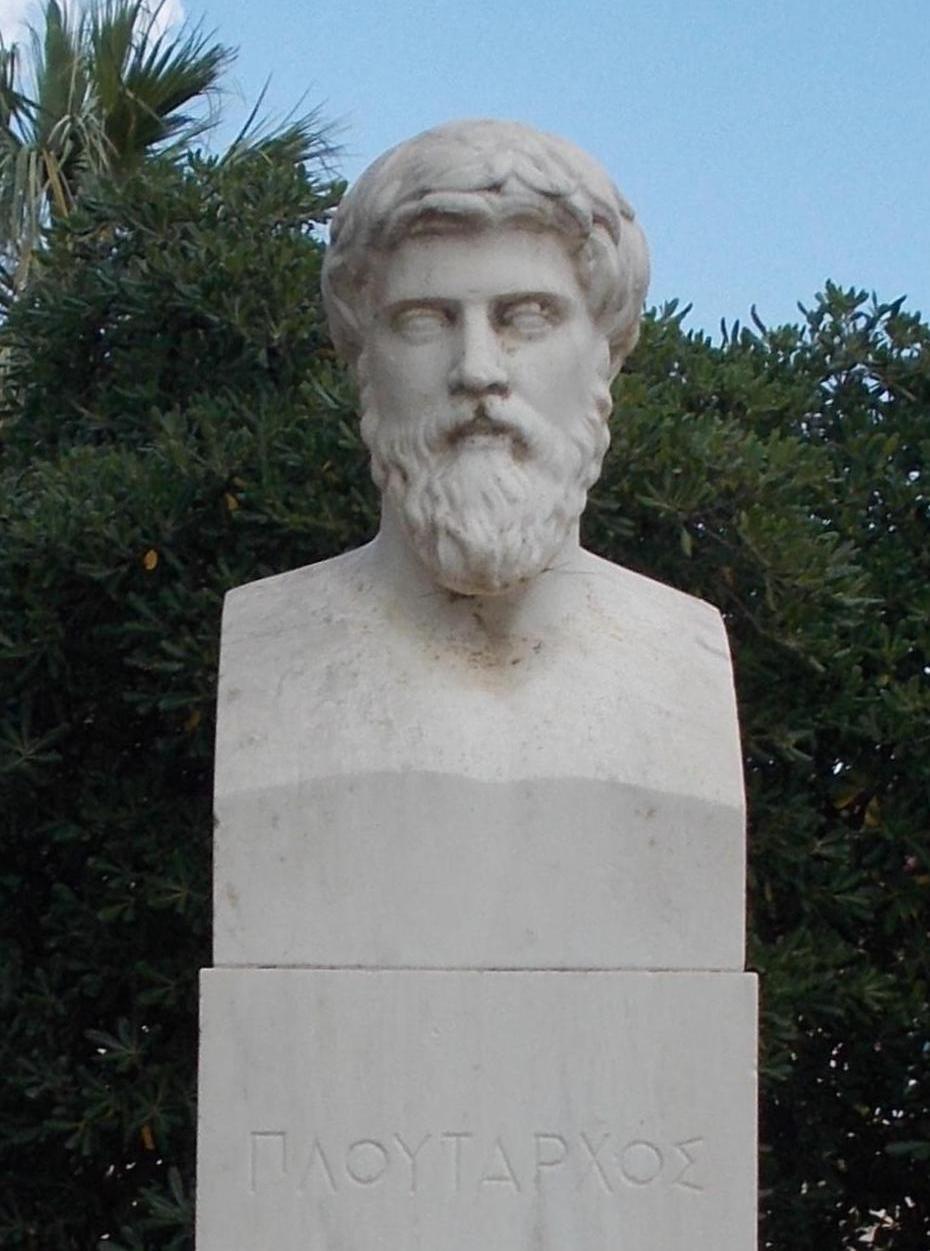
The Age of Alexander is a collection of nine of Plutarch's Lives covering the Greek world in the fourth and early third centuries BCE, from the decline of Sparta and Thebes through the rise of Macedon and the conquests of Alexander to the struggles of his successors. Removed from their original Roman pairings, they read as a sequence of Greek history told through character. The usual contents are the Lives of Agesilaus, Pelopidas, Dion, Timoleon, Demosthenes, Phocion, Alexander, Demetrius and Pyrrhus. Agesilaus, the lame Spartan king, wins victories in Asia Minor but presides over Sparta's decline after its defeat by Thebes. Pelopidas, the Theban liberator, leads the Sacred Band and dies charging into battle against the tyrant Alexander of Pherae. Dion, a Syracusan noble and pupil of Plato, tries to turn the young tyrant Dionysius II toward philosophy, is exiled, returns to liberate Syracuse, and is assassinated by a former friend. Timoleon of Corinth, haunted by his part in killing his tyrant brother, later liberates Sicily from tyrants and Carthaginians and retires honoured. Demosthenes, the great orator, overcomes a speech impediment by rigorous practice, rallies Athens against Philip of Macedon, and after the Macedonian victory takes poison rather than be captured. Phocion, the austere Athenian general elected forty-five times, counsels accommodation with Macedon and is unjustly condemned to drink hemlock. The longest life is Alexander's: his birth and omens, his education under Aristotle, the taming of Bucephalus, his accession, the destruction of Thebes, the conquest of the Persian Empire, his growing adoption of Persian customs, the killing of his friend Cleitus in a drunken quarrel, the mutiny in India, the death of Hephaestion, and his own death at Babylon after a fever, aged thirty-two. Plutarch begins by explaining that he writes lives, not histories, and is interested in small signs of character more than in battles. Demetrius the Besieger, a brilliant, dissolute successor king, wins and loses kingdoms and dies in captivity from idleness and drink. Pyrrhus of Epirus, the great general, defeats the Romans at costly victories and dies in a street fight at Argos, struck by a tile thrown by an old woman. Throughout, Plutarch weighs ambition, self-control, luck and the corrupting effects of power, offering moral portraits rather than impartial history.
Plot or Argument
- Agesilaus and Pelopidas
Sparta's last great king and the Theban hero who helped break Spartan power: the rivalry of Greek city-states before Macedon.
- Dion and Timoleon
Two Sicilian liberators: Dion, Plato's pupil, fails tragically; Timoleon succeeds and retires in honour.
- Demosthenes and Phocion
Two Athenian responses to Macedon: the orator's resistance and the general's realism, both ending in forced death.
- Alexander
The conqueror's life from birth to death, emphasizing character, education, ambition, anger and excess.
- Demetrius and Pyrrhus
Successor-era kings whose talents are undone by appetite and restless ambition.
Characters
- Alexander the Great, subject
Macedonian king and conqueror, portrayed as brilliant, generous and increasingly violent and suspicious.
- Demosthenes, subject
Athenian orator who led opposition to Macedon and died by poison.
- Phocion, subject
Incorruptible Athenian general and statesman executed by his own city.
- Dion, subject
Syracusan statesman, friend of Plato, assassinated after freeing his city.
- Timoleon, subject
Corinthian liberator of Sicily.
- Agesilaus, subject
Lame Spartan king of great energy whose reign saw Sparta's decline.
- Pelopidas, subject
Theban general and liberator, friend of Epaminondas.
- Demetrius Poliorcetes, subject
Flamboyant Macedonian successor king who ended his life a captive.
- Pyrrhus, subject
King of Epirus whose costly victories gave us the phrase 'Pyrrhic victory'.
- Aristotle, Alexander's teacher
Philosopher who taught Alexander ethics, politics and, according to Plutarch, an interest in medicine.
Lessons
Character shows in small things
Plutarch argues that a jest or a gesture can reveal more than a battle. His method models attention to everyday behaviour as the key to understanding leaders.
- Which small anecdote in Alexander's Life tells you most about him?
- Is Plutarch's approach fair to his subjects?
Power corrodes self-control
Alexander's decline into suspicion and violence, Demetrius's dissipation and Pyrrhus's endless wars show how success breeds excess. Plutarch makes self-mastery the essential royal virtue.
- What role does wine play in Alexander's decline?
- Could any of these men have stopped?
- What modern leaders fit Plutarch's patterns?
Philosophy and politics
Dion's attempt to make Dionysius a philosopher and Phocion's austere integrity show the difficulty of bringing philosophical virtue into politics.
- Why did Dion fail where Timoleon succeeded?
- Was Phocion right to counsel accommodation with Macedon?
Context
The Lives cover roughly 400–272 BCE, from Spartan hegemony to the Hellenistic kingdoms. Plutarch wrote four centuries later under Trajan, drawing on earlier historians now mostly lost, and used Greek history to address the moral concerns of Greeks and Romans in his own time.
Composition
The Parallel Lives were written in the late first and early second centuries CE, each Greek life paired with a Roman one and often followed by a comparison. This volume, translated by Ian Scott-Kilvert (1973; revised by Timothy Duff), extracts nine Greek lives into chronological order.
Reception
Through Amyot's French (1559) and Thomas North's English (1579) translations, the Lives shaped Renaissance political thought and drama. Plutarch's Alexander remains one of the most influential portraits of the conqueror.
Comparisons
- the-fall-of-the-roman-republic
The Roman Lives were written as pairs to these Greek ones; Alexander's parallel is Caesar, whose life appears in the Roman volume.
- phaedrus-and-letters-vii-and-viii
Plato's Seventh Letter gives his own account of the Sicilian episodes that Plutarch narrates in the Life of Dion.
- the-histories
Herodotus describes the Persian Empire at its height; Plutarch's Alexander describes its conquest a century and a half later.
- the-twelve-caesars
Suetonius's imperial biographies share Plutarch's taste for revealing anecdote but are less moralizing and more gossipy.
- frankenstein
The creature educates himself partly by reading Plutarch's Lives, which shape his ideas of virtue and heroism.
Quotes
“For it is not Histories that I am writing, but Lives; and in the most illustrious deeds there is not always a manifestation of virtue or vice”
For Students
A reading companion for classical Christian high school students. See the student guide.
Reading Guide
Watch for
- The opening of the Life of Alexander, where Plutarch says he writes lives, not histories, and compares himself to a portrait painter who studies the face and eyes. Test that promise against every life in the volume.
- Small scenes that reveal character: the boy Alexander taming Bucephalus, Alexander drinking the physician Philip's medicine while handing him the letter accusing him of poison, Demosthenes practicing speeches with pebbles in his mouth.
- The killing of Cleitus at a banquet in the Life of Alexander, and Alexander's grief and the flattering consolations offered to him afterward. Watch how Plutarch traces his growing anger and suspicion.
- The paired Athenians, Demosthenes and Phocion: one resists Macedon with oratory, the other counsels accommodation, and both die by poison at the hands of their enemies or their own city.
- Cineas's conversation with Pyrrhus about what he will do after conquering Italy, Sicily, and Africa, and Pyrrhus's death at Argos from a tile thrown by an old woman.
Key terms and names
- Life (bios)
- Plutarch's chosen form, a moral portrait of one person's character rather than a full history of events. He explains in the Life of Alexander that a jest or a phrase can reveal more than a battle.
- Bucephalus
- The fierce horse no one could ride until the boy Alexander noticed it was frightened of its own shadow and turned it toward the sun. Philip's response foreshadows his son's ambition.
- Cleitus
- The veteran officer who had saved Alexander's life at the Granicus and whom Alexander killed with a spear in a drunken quarrel. The episode marks the darkening of Alexander's character in Plutarch's account.
- Sacred Band
- The elite Theban company of three hundred that Pelopidas led to victory over Sparta. Its destruction by Philip at Chaeronea marks the end of Theban power.
- Dionysius II
- The young tyrant of Syracuse whom Dion and Plato tried to turn toward philosophy. His failure to reform leads to Dion's exile and his armed return.
- Pyrrhic victory
- A victory so costly that it ruins the victor, named from Pyrrhus's battles against the Romans in which he lost so many men that another such win would have undone him.
- Synkrisis
- The formal comparison Plutarch wrote after each pair of Greek and Roman lives. In this Greek-only selection the comparisons are removed, but lives such as Demosthenes and Phocion still invite the reader to weigh them against each other.
Seminar Questions
- Comprehension How does the young Alexander tame Bucephalus, and what does Philip say to him afterward?
- Comprehension What does Dion try to accomplish with Dionysius II, with Plato's help, and why does the attempt fail?
- Comprehension How do Demosthenes and Phocion each respond to the power of Macedon, and how does each of them die?
- Interpretation Plutarch says small things often show character better than great battles. Choose one small scene from the Life of Alexander and argue what it reveals that his victories do not.
- Interpretation After Cleitus's death, some philosophers comfort Alexander by telling him a king is above law. How does Plutarch judge that consolation, and what does it suggest about the danger of flatterers to a ruler?
- Interpretation Timoleon retires honored after freeing Sicily, while Dion is murdered after freeing Syracuse. What does Plutarch suggest made the difference between them?
- Interpretation Cineas asks Pyrrhus what he will do when all his conquests are complete, and Pyrrhus admits he will rest and enjoy himself. Why does Plutarch include this conversation, and how does Pyrrhus's death answer it?
- Big Question Is ambition a virtue that power corrupts, or a vice that great gifts make more dangerous?
Faith Connections
- Daniel 8:5-8, 20-22 (Scripture)
Daniel's vision of a he-goat from the west whose great horn is broken at the height of its strength and replaced by four is explained as the king of Greece and the kingdoms that follow him. Plutarch's Alexander, dead at thirty-two, and the warring successors Demetrius and Pyrrhus fill in the human story behind the prophecy.
- Proverbs 16:32 (Scripture)
Whoever is slow to anger is better than the mighty, and whoever rules his spirit than one who takes a city. Alexander conquered the Persian Empire but could not rule his anger at the banquet where he killed Cleitus, which is exactly the contrast Plutarch draws.
- Augustine, City of God IV.4 (Church Fathers)
Augustine tells of a captured pirate who answered Alexander that he was called a robber for doing with one ship what Alexander did with a great fleet. Augustine uses the story to argue that kingdoms without justice are great robberies, a sharper verdict on conquest than Plutarch's portrait of Alexander's virtues and vices.
Logic and Rhetoric
Central argument: History records deeds, but character is revealed more truly in small acts, words, and habits. The nine lives show that the same gifts of courage, eloquence, and ambition lead to honor when governed by self-control, as with Timoleon, and to ruin when governed by anger, flattery, or appetite, as with Alexander in his later years, Demetrius, and Pyrrhus. Since luck and power magnify whatever is already in a man, the reader who studies these lives can learn which virtues to imitate and which vices to avoid. Therefore biography is a school of moral formation, not just a record of the past.
Rhetorical device: synkrisis (moral comparison). The volume places Demosthenes and Phocion side by side as two Athenians facing Macedon, one with fiery resistance and the other with sober realism. Plutarch lets their contrasting choices and parallel deaths do the arguing, so the reader must decide which served Athens better.
Debate: Resolved: Phocion served Athens better than Demosthenes.
Writing Prompts
Essay: Plutarch claims that a small action often shows more of a man's character than his greatest battles. Test this claim against the Life of Alexander, using the taming of Bucephalus, the medicine of Philip the physician, and the killing of Cleitus, and argue whether Alexander's character changes or is simply revealed.
Comparison with The Fall of the Roman Republic: Six Lives: Plutarch paired his Alexander with his Caesar, and the Caesar appears in the Roman volume. Compare the two conquerors' ambition, generosity, anger, and deaths, and argue which life Plutarch presents as the greater warning.
Medical Lens
The Life of Alexander is a rich source for ancient medicine. Plutarch says Aristotle gave Alexander an interest in medicine and that he prescribed remedies for his friends. When Alexander falls dangerously ill after bathing in the Cydnus, he drinks the medicine of his physician Philip while handing him a letter accusing Philip of poisoning, a famous scene of trust in a doctor. After Hephaestion dies of fever, having disobeyed his physician's dietary orders, Alexander in grief has the physician Glaucias executed. Alexander's own death at Babylon is described from the royal journals as a progressive fever after drinking; Plutarch reports, and doubts, rumours of poison. Heavy drinking runs through the life, notably in the killing of Cleitus. Demosthenes dies by poison he carries in a pen, Phocion is executed by hemlock, Agesilaus' lameness is debated as a disqualification for kingship, and Pyrrhus is credited with a healing big toe. Modern retrospective diagnoses of Alexander's death (malaria, typhoid, pancreatitis, alcohol, poisoning and others) remain unproven.
- Life of Alexander 8
Aristotle's teaching gives Alexander a taste for medicine; he treats his friends when they are ill.
- Life of Alexander 19
Alexander falls ill after bathing in the cold Cydnus and drinks his physician Philip's draught while showing him an accusation of poisoning.
- Life of Alexander 50–52
In a drunken quarrel Alexander kills Cleitus, then lies prostrate with remorse for days.
- Life of Alexander 72
Hephaestion dies of fever after eating against his doctor's orders; Alexander has the physician executed and mourns extravagantly.
- Life of Alexander 75–77
Alexander's final fever at Babylon, day by day from the royal journals, with Plutarch's discussion of poisoning rumours.
- Life of Demosthenes 29–30
Demosthenes takes poison concealed in his pen to avoid capture by Macedonian agents.
- Life of Agesilaus 2–3
Agesilaus' lameness and the oracle warning Sparta against a 'lame kingship'.
Creative Prompts
- Dialogue
Write the conversation between Alexander and his physician Philip after Alexander recovers from the Cydnus fever.
- Essay
Was Phocion's realism wiser than Demosthenes' defiance? Argue from both Lives.
- Classroom
Choose one anecdote from each Life that best reveals character, and explain your choices as Plutarch would.
Further Reading
- The Campaigns of Alexander, Arrian
- Alexander the Great, Robin Lane Fox
- Plutarch's Lives: Exploring Virtue and Vice, Timothy E. Duff
- Antony and Cleopatra, William Shakespeare
Example of Shakespeare's use of North's Plutarch (from the Roman Lives).
Verification notes
The general content of each Life and the medical anecdotes are well established. This volume's exact contents are given from memory. The Perrin quotation is a famous passage; it is quoted as the first part of a longer sentence and should be checked for exact wording. Chapter numbers follow the standard Loeb divisions and are approximate for ranges.
- Exact contents and order of the nine Lives in this volume.
- Perrin's wording of Alexander 1.2 (capitalization of Histories and Lives).
- Chapter numbers for Hephaestion's death (72) and the killing of Cleitus (50–52).
- Location of the healing big toe of Pyrrhus (recalled as Life of Pyrrhus 3).