Work record
Fragments
c. 500 BCE · Ancient · Philosophy · Ancient Greek
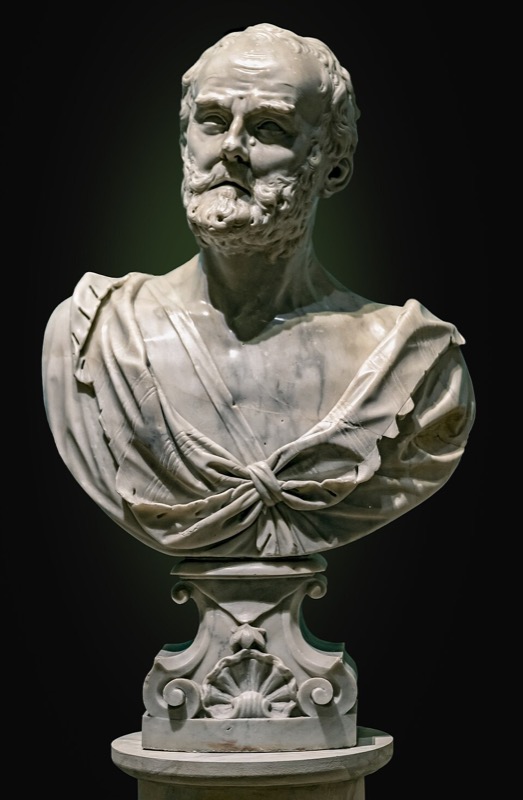

Summary
Heraclitus's book does not survive; what remains are roughly 130 short sayings preserved as quotations by later authors such as Plato, Aristotle, Plutarch, Sextus Empiricus, Clement of Alexandria, Hippolytus and Diogenes Laertius. Modern editions number them according to Hermann Diels and Walther Kranz (DK), and the reference edition presents them in a fresh translation with commentary. The fragments are compressed, paradoxical aphorisms, and their arrangement is the work of editors, but several connected ideas run through them. First is the logos, the account or principle according to which all things happen, which is common to all and yet which most people fail to understand even after they hear it, living as if asleep in private worlds. Second is perpetual change: the world is an ever-living fire, kindling in measures and going out in measures, and all things are exchanged for fire as goods for gold. The famous river fragments say that one cannot step twice into the same river, because different waters flow on; identity persists through, and because of, constant flow. Third is the unity of opposites: the way up and the way down are one and the same; sea water is purest and most polluted, drinkable and healthy for fish, deadly for humans; sickness makes health pleasant, hunger makes satiety, weariness rest. Strife or war is the father of all, and justice is strife, since the tension of opposites, like that of the bow and the lyre, makes harmony. Fourth is a psychology of the soul linked to physics: souls come from and pass into water, the dry soul is wisest and best, and a drunk man, whose soul is moist, is led stumbling by a boy. The boundaries of the soul cannot be found, so deep is its measure. Other fragments mock polymathy, Homer and Hesiod, Pythagoras, popular religion, blood purification and the worship of images, praise the few excellent over the many, and make terse ethical claims, notably that character is a person's fate. Ancient biographies add colourful anecdotes, including his misanthropy and a death from dropsy that he tried to treat himself.
Plot or Argument
- The logos and human incomprehension
Fragments on the common account that governs all things and the failure of people to grasp it, living as sleepers in private worlds (DK 1, 2, 50, 89).
- Fire and the measured cosmos
The world as an ever-living fire kindled and extinguished in measures; exchanges of fire for all things (DK 30, 31, 90).
- Flux and the river
Sayings on stepping into rivers and change as the condition of persistence (DK 12, 49a, 91).
- Unity of opposites and strife
The way up and down, sea water, health and sickness, war as father of all, the harmony of bow and lyre (DK 8, 51, 53, 60, 61, 80, 111).
- Soul, sleep and drunkenness
The soul's depth, its transformations from water, the dry soul as wisest, the drunkard's moist soul, waking and sleeping worlds (DK 26, 36, 45, 89, 117, 118).
- Critique and ethics
Attacks on polymathy, poets and ritual; aphorisms on character, excellence and law (DK 5, 40, 42, 44, 114, 119).
Lessons
Change is the condition of being
Heraclitus holds that things remain what they are only by changing, like a river. The fragments invite readers to see stability and flux as partners rather than opposites.
- In what sense are you the same person you were ten years ago?
- Is the river fragment about the river, the person, or both?
Opposites depend on each other
Health makes sense only against sickness, rest against weariness. Heraclitus suggests that tension and contrast are the structure of experience.
- Is it true that sickness makes health pleasant?
- What is the 'harmony of the bow and the lyre'?
- Can 'war is the father of all' be read non-violently?
Most people sleepwalk
Heraclitus criticises those who live in private worlds and fail to attend to what is common. His fragments demand alert attention and self-inquiry.
- What does Heraclitus mean by the waking having one common world?
- What might 'I searched out myself' (DK 101) mean in practice?
Context
Heraclitus wrote in Ionia under Persian rule, in the generation after the Milesian natural philosophers (Thales, Anaximander, Anaximenes) and at the same time as Pythagoras and Xenophanes. His ideas influenced Plato (through Cratylus), the Stoics, who adopted his fire and logos, and early Christian thinkers.
Composition
His book, said to have been divided into sections on the universe, politics and theology, was lost. Fragments were collected by modern scholars, notably Ingram Bywater (1877) and Diels (1903), whose numbering, revised by Kranz, is standard.
Reception
Heraclitus has fascinated philosophers from Hegel and Nietzsche to Heidegger, and poets including T. S. Eliot, who used two fragments as epigraphs to Four Quartets. His reputation for obscurity has made him a perennial subject of competing interpretations.
Comparisons
- meditations
Marcus Aurelius cites Heraclitus repeatedly; Stoic physics of fire and logos and the meditations on flux owe much to him.
- phaedrus-and-letters-vii-and-viii
Plato's theory of Forms was partly a response to Heraclitean flux, which Plato knew through Cratylus.
- the-bhagavad-gita
Both teach equanimity before the play of opposites and a cosmic order beyond individual fortune.
- the-histories
Herodotus wrote of the same Ionian world a generation later and shares an interest in reversals and the instability of fortune.
- the-waves
Woolf's novel of flowing consciousness and the sea's rhythms is often read as a modernist meditation on Heraclitean flux and identity.
Quotes
“This world, which is the same for all, no one of gods or men has made; but it was ever, is now, and ever shall be an ever-living Fire, with measures of it kindling, and measures going out.”
“War is the father of all and the king of all; and some he has made gods and some men, some bond and some free.”
“The way up and the way down is one and the same.”
“You cannot step twice into the same rivers; for fresh waters are ever flowing in upon you.”
“A man, when he gets drunk, is led by a beardless lad, tripping, knowing not where he steps, having his soul moist.”
“The dry soul is the wisest and best”
“Nature loves to hide.”
For Students
A reading companion for classical Christian high school students. See the student guide.
Reading Guide
Watch for
- The opening sayings on the logos (DK 1 and 2): an account that is common to all and by which all things come to pass, which people fail to grasp even after hearing it, living as if each had a private understanding. Keep asking what Heraclitus thinks the sleepers are missing.
- The three river fragments (DK 12, 49a, 91). Compare them side by side: one says the waters are always different, another that we step and do not step into the same rivers. Notice that the river stays a river because its waters change.
- Pairs of opposites held together: the way up and the way down (DK 60), sea water that is life to fish and death to men (DK 61), sickness that makes health sweet (DK 111), and the bow and the lyre whose harmony comes from opposed tension (DK 51).
- The fragments on the soul: the dry soul as wisest and best (DK 118), the drunk man led stumbling by a boy because his soul is moist (DK 117), and the soul whose boundaries cannot be found however far one travels (DK 45).
- Who preserved each saying. Many come through Hippolytus, Clement of Alexandria, Plutarch, and Aristotle, and each quoted Heraclitus for his own argument; the frame can change how a fragment sounds.
Key terms and names
- Logos
- Heraclitus's word for the account or rational principle according to which all things happen. It is common to everyone and spoken plainly, yet most people neither notice nor understand it.
- DK numbering
- The standard numbering of the fragments from the edition of Hermann Diels, revised by Walther Kranz. Because the original book is lost, the order is an editor's arrangement, not Heraclitus's own.
- Ever-living fire
- In DK 30 the world itself is a fire kindling in measures and going out in measures, made by no god or man. Fire is both the stuff that changes and the measure that keeps change orderly.
- Unity of opposites
- The teaching, running through DK 51, 60, 61, and 111, that apparent opposites belong together and depend on one another. The bow and the lyre are his favorite images of harmony made by tension.
- War (polemos)
- In DK 53 and 80 war or strife is the father and king of all and is identified with justice. Heraclitus means the contest of opposites that keeps the world in being, against those who pray for strife to vanish.
- Dry soul
- Heraclitus's soul is physical and passes into and out of water. The driest soul, closest to fire, is the wisest (DK 118), while drunkenness moistens and darkens it.
- Ephesus
- The Ionian Greek city where Heraclitus lived around 500 BC. Several fragments scorn its citizens for exiling their best man, Hermodorus, and ancient tradition says he deposited his book in the temple of Artemis there.
Seminar Questions
- Comprehension According to DK 1 and 2, what is the logos, and how do most people relate to it?
- Comprehension In the river fragments, what changes and what stays the same when a person steps into a river?
- Comprehension What examples does Heraclitus give of opposites that turn out to be connected, such as the way up and the way down or the sea water that helps fish and kills men?
- Interpretation Heraclitus calls war the father of all and identifies strife with justice. Is he praising violence, or is he describing the tension that holds any ordered thing together, as in the bow and the lyre?
- Interpretation Why would Heraclitus connect wisdom with a dry soul and foolishness with a moist, drunken one? What does this suggest about how body and mind are related in his thought?
- Interpretation Heraclitus mocks Homer, Hesiod, and Pythagoras and says much learning does not teach understanding (DK 40). What, then, is the difference between knowing many things and understanding the logos?
- Big Question If all things are always changing, can anything about a person, such as character, which Heraclitus calls a man's fate (DK 119), remain truly his own over a lifetime?
Faith Connections
- John 1:1-14 (Scripture)
John opens his Gospel with the Logos who was with God, through whom all things were made, and who became flesh. Heraclitus's logos is an impersonal principle that men fail to grasp; John uses the same Greek word for a person who comes to his own and is not received, which makes the two openings rewarding to read together.
- Ecclesiastes 1:4-9 (Scripture)
The Preacher watches generations come and go, the sun rise and set, and the rivers run into a sea that is never full. Like Heraclitus he sees constant flow, but where Heraclitus finds an ordering logos within the flux, the Preacher finds vanity under the sun and later points beyond it to the fear of God.
- Justin Martyr, First Apology 46 (Church Fathers)
Justin argues that Christ is the Logos in whom every race of men has shared, and that those who lived according to reason, among the Greeks Socrates and Heraclitus, may be counted as Christians even though they were thought atheists. It is one of the earliest Christian attempts to honor pagan philosophy without absorbing it.
- Hippolytus, Refutation of All Heresies IX (Church Fathers)
Hippolytus quotes a long run of Heraclitus's sayings on the unity of opposites in order to argue that the teacher Noetus drew his errors about the Father and the Son from Heraclitus rather than from Christ. Many fragments survive only because a Christian bishop cited them in a controversy.
Logic and Rhetoric
Central argument: All things come to pass according to a single logos that is common to all; what appear to be opposites, up and down, sickness and health, war and peace, are bound together in tension; change, like the flow of a river or the measured burning of fire, is the condition of the world's stability rather than its enemy; therefore wisdom does not lie in much learning or private opinion but in listening to the common logos, which most people, like sleepers, fail to do.
Rhetorical device: paradox. Heraclitus compresses his teaching into sayings that seem to contradict themselves, such as the way up and the way down being one and the same (DK 60) and the river into which we cannot step twice (DK 91). The jolt of apparent contradiction forces the hearer to look for the deeper unity he claims lies hidden, in keeping with his remark that nature loves to hide (DK 123).
Debate: Resolved: Heraclitus is right that strife, not rest, is the source of order and excellence.
Memory Work
The dry soul is the wisest and best
Writing Prompts
Essay: Choose four fragments, including at least one river fragment and one fragment on war or strife, and argue whether Heraclitus's teaching is chiefly about change or chiefly about the hidden unity that persists through change.
Comparison with Meditations: Marcus Aurelius repeatedly recalls Heraclitus in the Meditations, using flux, fire, and the common reason of all things to steady himself as emperor. Compare how the two thinkers understand the logos and change, and argue whether Marcus uses Heraclitus faithfully or reshapes him into a Stoic teacher of acceptance.
Medical Lens
Heraclitus offers one of the earliest Greek psychologies tying mental states to physical substances: the soul's quality varies with moisture and dryness, so drunkenness 'moistens' the soul and wisdom is 'dry'. This anticipates, without being identical to, later Hippocratic and humoral explanations of temperament and intoxication. Fragments on sleep and waking (sleepers live in private worlds) are often quoted in discussions of dreams and consciousness. A fragment about physicians who cut and burn patients and demand fees illustrates the unity of opposites with an early, sardonic glance at surgery. Diogenes Laertius's story that Heraclitus died of dropsy after trying to cure himself by burying himself in dung, and his riddle to the doctors about turning rain into drought, are colourful but unreliable ancient anecdotes. Sickness making health pleasant (DK 111) is a frequently cited line on contrast in experience.
- DK 117–118
The drunk man with a moist soul led by a boy; the dry soul as wisest.
- DK 58
Physicians who cut and burn the sick and demand a fee, given as an example of good and ill being one.
- DK 111
Sickness makes health pleasant and good, hunger satiety, weariness rest.
- DK 21, 26, 75, 89
Fragments on sleep, death and waking; sleepers each turn into a private world.
- Diogenes Laertius, Lives IX.3–4 (ancient testimony)
Account of Heraclitus's dropsy, his riddle to the physicians and his attempt to cure himself with dung.
Creative Prompts
- Poetry
Write a sequence of twelve one-line fragments in Heraclitus's style about a hospital ward.
- Essay
Heraclitus says sickness makes health pleasant. Discuss the role of contrast in how patients experience recovery.
- Classroom
Compare three translations of the river fragment. How does each change the meaning?
Further Reading
- Early Greek Philosophy, John Burnet
- The Art and Thought of Heraclitus, Charles H. Kahn
- The Presocratic Philosophers, G. S. Kirk, J. E. Raven and M. Schofield
- Lives of Eminent Philosophers, Diogenes Laertius
Book IX contains the ancient life of Heraclitus.
Verification notes
DK numbers for these well-known fragments are secure. Burnet's wording is quoted from memory and the Bywater cross-references are less certain. The reference edition uses a different modern translation; the quotations here are Burnet's for public-domain reasons.
- Burnet's exact wording for all quoted fragments, especially DK 30 and DK 117.
- Bywater numbers given in parentheses.
- Burnet's version of DK 119 ('character is fate') and DK 58 (physicians), omitted.
- Translator and editor of the current edition (believed to be Brooks Haxton, 2001).
- Diogenes Laertius section numbers for the dropsy anecdote (given as IX.3–4).